Application and Material of Gearbox Housing
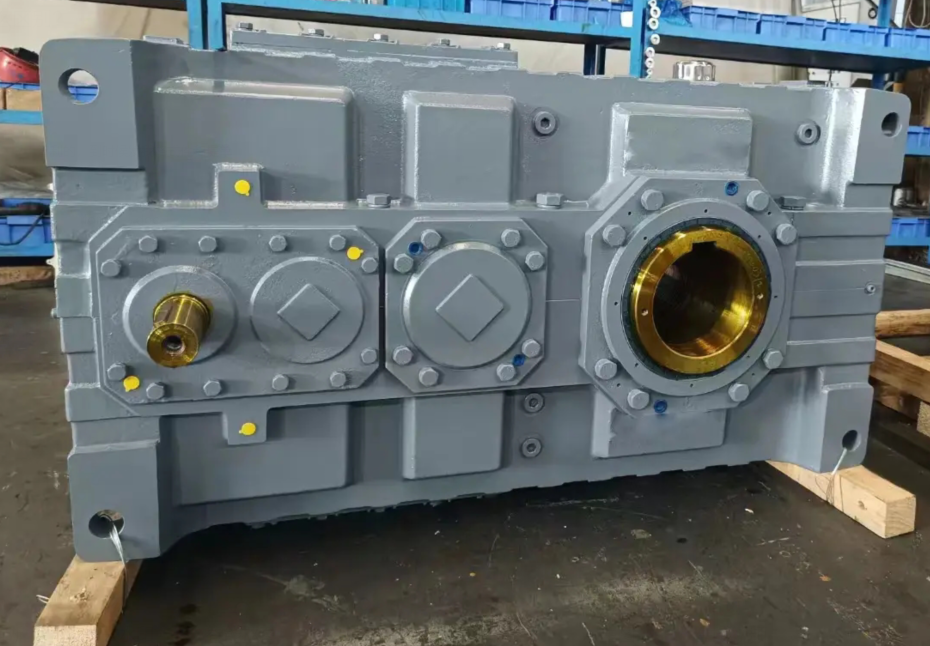
The gearbox housing is the main structural component of the gearbox, primarily used to support, secure, and protect internal transmission components (such as gears, shafts, bearings, etc.), while also forming an enclosed space to achieve lubrication, heat dissipation, and load transfer functions.
Core Functions:
Support and Positioning: Provides a precise mounting base for gears, shafts, bearings, etc., maintaining relative positional accuracy.
Load Bearing and Power Transmission: Withstands the periodic impact loads generated by gear meshing and enhances rigidity through structures such as ribs and bosses.
Sealing and Lubrication: Forms an enclosed cavity with integrated oil grooves, oil indicators, and oil passages, enabling splash or circulation lubrication and preventing oil leakage.
Heat Dissipation: Some housing exterior surfaces are equipped with cooling ribs or integrated oil cooling channels to control operating temperature (usually oil temperature ≤ 80℃).
Typical Material Selection:
Gray Cast Iron (HT200/HT250): Suitable for 80% of conventional reducers, offering good shock absorption and low cost.
Cast Steel (ZG270-500): Used in heavy-duty and high-impact scenarios such as mining machinery.
Welded Steel Plate (Q235): Suitable for small-batch, customized production with a short manufacturing cycle.
Lightweight Alloys (Aluminum, Magnesium): Used in modern designs to reduce weight, especially in wind power, automotive, and other fields.
Application Fields:Industrial Equipment: Reducers, mixers, extruders, etc.Transportation: Automotive gearboxes, high-speed rail traction gearboxes, locomotive axle gearboxes.
Energy Equipment: Wind turbine gearbox.
Previous:Cast Iron Motor End Cover
Send Inquiry



X
We use cookies to offer you a better browsing experience, analyze site traffic and personalize content. By using this site, you agree to our use of cookies.
Privacy Policy