What Makes Ductile Iron Casting a Reliable Choice for Heavy-Duty Parts?
Article Summary
Choosing the right casting material is not only about strength on paper. Buyers also care about long service life, dimensional stability, machining efficiency, delivery consistency, and whether a supplier can keep quality under control from drawing review to shipment. This article explains why Ductile Iron Casting is widely used for demanding mechanical parts, how it compares with gray iron and steel casting, what buyers should check before placing an order, and how a capable manufacturer can reduce risks in custom casting projects.
For companies sourcing bearing housings, hydraulic parts, brackets, machinery components, automotive parts, agricultural equipment parts, and valve bodies, Ductile Iron Casting offers a practical balance of strength, toughness, wear resistance, and cost control. Ningbo Supreme Machinery Co., Ltd works with customers who need cast components that perform reliably in real industrial environments, not just in catalog descriptions.
Table of Contents
- Article Outline
- What Is Ductile Iron Casting?
- Why Do Buyers Struggle When Sourcing Cast Iron Parts?
- What Advantages Does Ductile Iron Casting Offer?
- Which Material Should Buyers Choose for Mechanical Parts?
- Where Is Ductile Iron Casting Commonly Used?
- What Quality Details Should Be Checked Before Ordering?
- How Can a Manufacturer Reduce Project Risk?
- FAQ About Ductile Iron Casting
- Contact Us
Article Outline
- Explain the structure and performance logic behind Ductile Iron Casting.
- Identify common buyer problems, including cracking, unstable dimensions, unclear grades, and poor machining results.
- Compare ductile iron with gray iron and steel casting from a purchasing perspective.
- List typical applications in machinery, automotive, hydraulic, agricultural, and industrial equipment fields.
- Provide practical inspection and supplier-selection guidance for custom casting projects.
- Answer frequent questions that purchasing managers, engineers, and project buyers often ask.
What Is Ductile Iron Casting?
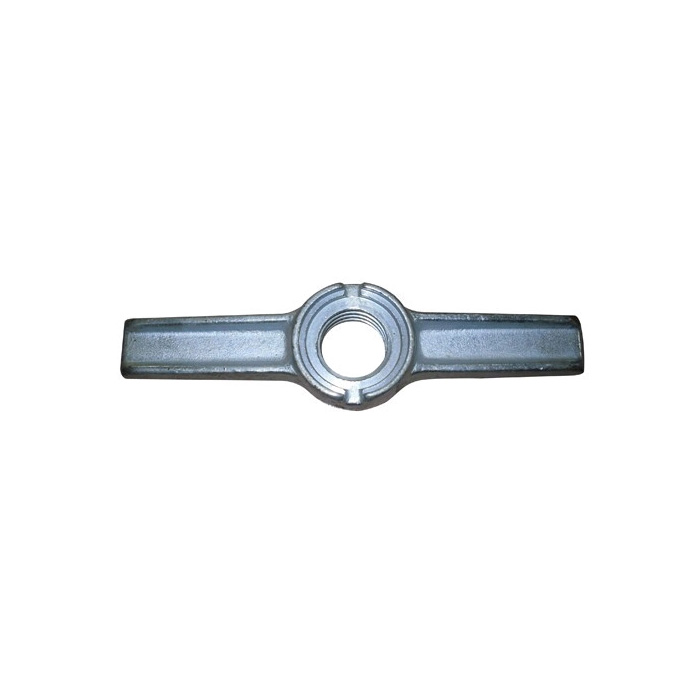
Ductile Iron Casting is a casting process that uses ductile iron, also known as nodular cast iron or spheroidal graphite iron. Its key feature lies in the shape of graphite within the metal structure. In ordinary gray iron, graphite appears in flake form, which can make the material easier to crack under stress. In ductile iron, the graphite is formed into rounded nodules through a treatment process, giving the material better toughness, higher strength, and improved resistance to impact.
This difference may sound technical, but the purchasing result is easy to understand: a well-made ductile iron component can handle heavier loads, repeated stress, and more demanding working conditions than many traditional cast iron parts. That is why buyers often use Ductile Iron Casting for parts that need to stay stable under pressure, vibration, friction, or outdoor operating conditions.
In real sourcing decisions, buyers are rarely looking for the cheapest casting alone. They usually need a casting that can reduce failure rates, simplify machining, control replacement costs, and keep equipment running longer.
Why Do Buyers Struggle When Sourcing Cast Iron Parts?
Many casting projects look simple at the inquiry stage. A buyer sends a drawing, receives a quotation, and compares prices. The real problems often appear later: the part cracks during assembly, machining allowance is inconsistent, the surface has defects, holes are not stable, or the mechanical properties do not match the working environment. Once these issues happen, the cost is no longer limited to the casting price. Delayed assembly, rejected shipments, urgent rework, and customer complaints can quickly become much more expensive.
A common pain point is unclear material selection. Some buyers use gray iron because it is familiar and economical, but later find that the part does not have enough toughness. Others choose steel casting for strength, only to face higher production costs or heavier machining work. Ductile Iron Casting often becomes the practical middle ground because it offers a strong combination of mechanical performance and production efficiency.
- Unstable dimensions: poor process control can create fitting problems after machining.
- Unexpected cracking: material grade and graphite structure may not match the load condition.
- Rough surface quality: defects can increase finishing time and reduce visual acceptance.
- Inconsistent batches: repeated orders may vary if the foundry lacks process discipline.
- Weak communication: incomplete drawing review can cause errors before production even starts.
What Advantages Does Ductile Iron Casting Offer?
The biggest advantage of Ductile Iron Casting is balance. It is strong, but not unnecessarily expensive. It is tough, but still suitable for efficient casting production. It can support complex shapes, but it also allows buyers to maintain practical control over tooling, machining, and batch delivery.
For heavy-duty parts, ductile iron can provide good tensile strength, wear resistance, fatigue resistance, and impact performance. This makes it suitable for components that carry load or transmit force. For buyers who manage equipment parts, the value is direct: fewer failures, better durability, and more predictable service life.
| Buyer Concern | How Ductile Iron Casting Helps | Practical Value |
|---|---|---|
| Strength under load | Rounded graphite structure improves toughness and load-bearing ability. | Suitable for brackets, housings, hubs, and mechanical support parts. |
| Cost pressure | Often more economical than steel casting for many industrial components. | Helps control unit cost without sacrificing key performance requirements. |
| Machining needs | Can be produced with stable shape and clear outline when process control is strong. | Reduces machining difficulty and improves assembly consistency. |
| Durability | Good resistance to wear, vibration, and repeated mechanical stress. | Supports longer service life in machinery and vehicle-related applications. |
| Design flexibility | Works with sand casting, shell molding, automatic molding, and other casting methods. | Allows customized shapes for different industries and project sizes. |
Which Material Should Buyers Choose for Mechanical Parts?
Material choice should begin with the working condition of the part. If the component mainly needs vibration damping and does not carry severe impact load, gray iron may be enough. If the part must handle extreme load, welding requirements, or special structural demands, steel casting may be considered. However, when the project needs strength, toughness, castability, and cost control at the same time, Ductile Iron Casting is often the more practical choice.
| Material | Main Strength | Possible Limitation | Best-Fit Situation |
|---|---|---|---|
| Gray Iron | Good damping ability and economical production. | Lower toughness compared with ductile iron. | Machine bases, covers, non-critical housings, and parts with limited impact load. |
| Ductile Iron | Strong balance of strength, toughness, wear resistance, and cost. | Requires careful control of material treatment and casting process. | Automotive parts, hydraulic components, machinery parts, brackets, and valve bodies. |
| Steel Casting | High strength and broad engineering flexibility. | Higher cost and often more demanding machining or heat treatment. | Parts requiring special strength, weldability, or severe-duty structural performance. |
A responsible supplier should not push one material blindly. The better approach is to review drawings, working load, tolerance needs, annual quantity, surface requirements, and machining plans before recommending the most suitable casting route.
Where Is Ductile Iron Casting Commonly Used?
Because of its mechanical performance, Ductile Iron Casting is widely used in parts that require a stable combination of strength and reliability. It is especially valuable where parts must resist pressure, movement, vibration, and repeated service cycles.
- Automotive parts: steering knuckles, wheel hubs, brackets, brake-related components, and chassis parts.
- Agricultural machinery: equipment brackets, housings, supports, and wear-resistant working parts.
- Hydraulic systems: hydraulic cylinder parts, pump housings, and pressure-related components.
- Industrial machinery: bearing housings, machine supports, connecting brackets, and equipment frames.
- Valve and pipe systems: valve bodies, fittings, covers, and flow-control components.
- Construction and lifting equipment: load-bearing parts that need toughness and dimensional stability.
Ningbo Supreme Machinery Co., Ltd serves customers who need custom cast components for different industrial uses. For buyers, this matters because a casting project is rarely just about producing one shape. It is about matching material, tooling, process, inspection, machining, packing, and delivery with the real use of the part.
What Quality Details Should Be Checked Before Ordering?
A good Ductile Iron Casting project starts before molten metal enters the mold. Buyers should confirm technical requirements early so the supplier can prevent mistakes rather than repair them later. Drawings should include material grade, tolerances, machining areas, surface requirements, heat treatment requirements if needed, and inspection standards.
Material grade is especially important. Different grades offer different combinations of strength and elongation. A part that needs more ductility should not be treated the same as a part that mainly needs higher tensile strength. When a buyer only sends a sample without confirming the grade, the supplier may need to test or reverse-engineer the material, which can increase time and uncertainty.
- Confirm the correct material grade according to the working condition.
- Check whether the drawing clearly marks machined surfaces and critical dimensions.
- Review whether the casting process is suitable for the part size, wall thickness, and production quantity.
- Ask how the supplier controls molding, pouring, cooling, cleaning, and inspection.
- Confirm whether machining, surface treatment, packing, and export documents are included.
- Request inspection support when the part is used in a safety-critical or assembly-critical position.
A low quotation can look attractive, but unclear inspection and weak process control often create hidden costs. The right casting supplier should help buyers reduce uncertainty, not simply offer a number.
How Can a Manufacturer Reduce Project Risk?
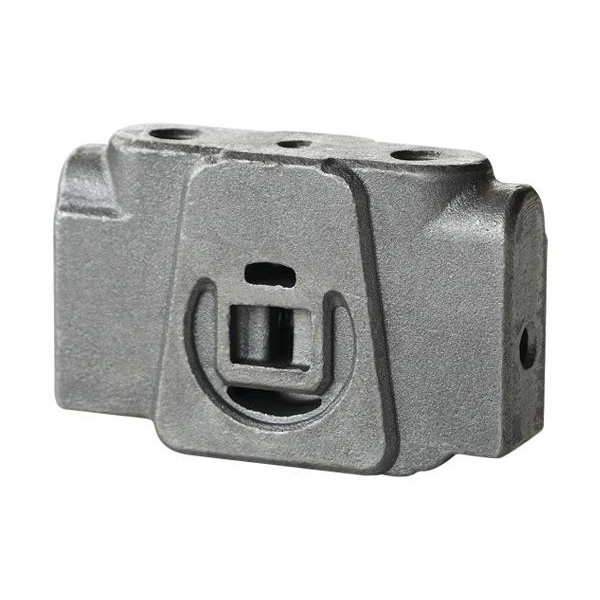
A reliable manufacturer does more than pour metal. For custom Ductile Iron Casting, risk control begins with communication. The supplier should understand the part function, check drawing feasibility, suggest reasonable casting methods, and explain possible production challenges before the order is confirmed.
Ningbo Supreme Machinery Co., Ltd can support buyers who need ductile iron parts made according to project requirements. For overseas customers, this type of support is especially useful because long-distance sourcing requires clear technical communication, stable documentation, and consistent batch management. When drawings, samples, material grades, and quality expectations are aligned early, the whole purchasing process becomes smoother.
Buyers should also value suppliers who understand both casting and downstream machining. Some defects are not obvious when the raw casting is first produced, but they become serious during drilling, milling, assembly, or pressure testing. A supplier with practical production experience can help adjust machining allowance, improve mold design, and reduce the possibility of late-stage rejection.
FAQ About Ductile Iron Casting
What is the main difference between ductile iron and gray iron?
The main difference is the graphite structure. Gray iron has flake graphite, while ductile iron has nodular graphite. This gives ductile iron better toughness, impact resistance, and strength, making it more suitable for parts that carry higher mechanical loads.
Is Ductile Iron Casting cheaper than steel casting?
In many applications, Ductile Iron Casting can be more cost-effective than steel casting. It often provides enough strength and toughness for industrial parts while helping buyers control production and machining costs. The final cost still depends on size, weight, quantity, grade, tooling, and finishing requirements.
Do buyers need to provide drawings before requesting a quotation?
A drawing is strongly recommended. It helps the manufacturer confirm dimensions, tolerances, machining areas, material grade, weight, surface requirements, and production feasibility. If drawings are not available, samples or detailed photos may help start the discussion.
Which casting processes can be used for ductile iron parts?
Common options include sand casting, green sand casting, resin sand casting, shell molding, and automatic molding. The best process depends on part size, shape complexity, surface expectations, quantity, and cost target.
Can Ductile Iron Casting be used for custom machinery parts?
Yes. Ductile Iron Casting is widely used for custom machinery parts such as housings, brackets, hydraulic components, bearing supports, valve bodies, and agricultural machinery components. Customization should be based on clear technical requirements and practical working conditions.
How can buyers reduce casting defects?
Buyers can reduce risk by choosing an experienced manufacturer, confirming material grade, providing clear drawings, discussing machining needs in advance, and requesting appropriate inspection. Good communication before production is one of the most effective ways to prevent costly defects.
Ready to Source Reliable Ductile Iron Casting Parts?
If you are looking for custom Ductile Iron Casting parts for machinery, automotive, hydraulic, agricultural, valve, or industrial equipment applications, Ningbo Supreme Machinery Co., Ltd can help you review drawings, discuss material selection, and develop a practical casting solution for your project. Share your drawings, samples, or purchasing requirements with our team today, and contact us to get a professional quotation and production suggestion.
Previous:Cast Iron Manhole Cover
Send Inquiry



X
We use cookies to offer you a better browsing experience, analyze site traffic and personalize content. By using this site, you agree to our use of cookies.
Privacy Policy