what is pre-tensioning
Pre-tensioning is a controlled engineering technique where tensile force is deliberately applied to a structural component (typically high-strength steel tendons, cables, or rods) before it is subjected to external service loads. It is most widely used in prestressed concrete construction, but also applied in cables, bolts, and mechanical assemblies.
How Pre-tensioning Works (in Concrete)
Tendon Stretching
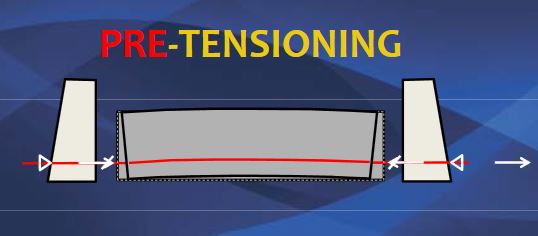
High-strength steel tendons (wires, strands, or bars) are placed inside a formwork and stretched to a specified tension force using hydraulic jacks, anchored against the rigid formwork or external abutments.
Concrete Placement & CuringConcrete is then poured around the tensioned tendons and allowed to cure and gain sufficient compressive strength.
Tendon Release
Once the concrete reaches the required strength, the external jacking force is released. The tendons attempt to contract back to their original length, but they are now bonded to the hardened concrete. This contraction induces compressive stress into the concrete member.Load ApplicationWhen external service loads (e.g., traffic, gravity, wind) are applied, they first have to overcome this built-in compressive stress before tensile stress can form in the concrete, significantly reducing or eliminating cracking.
Main Applications
Precast concrete beams, floor slabs, roof panels, and railway sleepers
Prestressed concrete piles for deep foundationsHigh-strength bolted connections (pre-tensioning bolts to prevent loosening under vibration)
Cables in bridges, towers, and tensile structuresMechanical components to improve fatigue resistance and dimensional stability
Primary Advantages
Reduces or eliminates tensile cracking in concreteIncreases the load-bearing capacity and stiffness of structuresAllows for longer spans with smaller member cross-sectionsImproves durability and resistance to fatigue and environmental damage
Enables lighter, more efficient structural designsIn summary, pre-tensioning is a precision manufacturing process that uses intentional initial tension to create a more resilient and efficient final structure, particularly dominant in the precast concrete industry.
Previous:Prestressed vs Post tensioned
Send Inquiry



X
We use cookies to offer you a better browsing experience, analyze site traffic and personalize content. By using this site, you agree to our use of cookies.
Privacy Policy