Prestressed vs Post tensioned
Prestressed concrete and post-tensioned concrete are both advanced concrete construction techniques that offset tensile stress in concrete (a material weak in tension) by introducing intentional compressive stress, enhancing structural strength, durability, and span capacity. Post-tensioning is a specific type of prestressing—the key distinction lies in when the compressive stress is applied to the concrete, along with differences in construction methods, equipment, and application scenarios. Below is a detailed comparison and explanation of the two terms, including core definitions, key differences, similarities, and typical uses.
Core Definitions
Prestressed Concrete (Broad Concept)Prestressed concrete refers to the general process of applying compressive stress to concrete before it is subjected to external service loads (e.g., dead load, live load). This pre-compression counteracts the tensile stress that would develop in the concrete under working conditions, keeping the concrete in a state of compression (or minimal tension) at all times, thus avoiding cracking and improving structural performance.
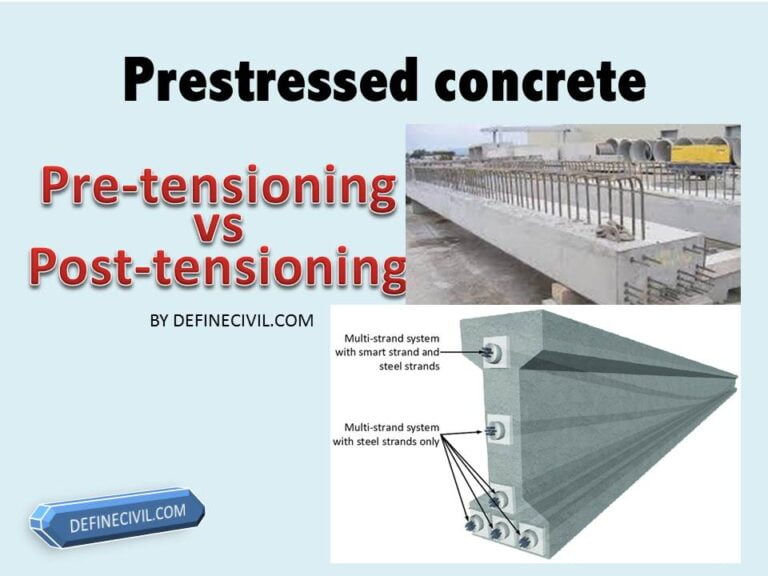
Pre-tensioned concrete (the "traditional" prestressing method, often the one referred to when "prestressed" is used in a narrow sense to contrast with post-tensioned)Post-tensioned concrete (the specialized method focused on on-site stressing)
Post-tensioned Concrete
A subset of prestressed concrete where tension is applied to the steel tendons after the concrete has been cast and cured to reach a specified design strength (typically 70% or more of its ultimate strength). The tensioned tendons transfer compressive stress to the concrete via anchorages at the ends of the structural member, achieving the prestressing effect.Key Differences (Pretensioned vs Post-tensioned—Narrow Prestressed Concept)The most common confusion is between pretensioned (prestressed in narrow sense) and post-tensioned concrete. The table below clarifies their core distinctions, as the two differ fundamentally in construction sequence, equipment, and application:
Typical Applications
Pretensioned Concrete (Narrow Prestressed)
Precast concrete products: hollow core slabs, precast floor beams, precast lintels, precast bridge girders (small/medium span).Mass-produced low-rise building components, precast parking garage slabs, and precast retaining wall panels.Post-tensioned Concrete
Building Construction: Long-span cast-in-place slabs (high-rises, malls, airports), transfer beams, shear walls, and flat-plate structures (no beams, saving floor height).Civil Engineering: Long-span bridge decks, box girders, cable-stayed bridge piers, and concrete dams (to resist hydrostatic pressure).Special Structures: Stadiums, auditoriums, industrial plants, and nuclear power plant structures (heavy load/long span requirements).Retrofit/Strengthening: Upgrading existing concrete structures (e.g., adding prestress to a cracked beam/slab to restore strength).
Send Inquiry



X
We use cookies to offer you a better browsing experience, analyze site traffic and personalize content. By using this site, you agree to our use of cookies.
Privacy Policy