How does a unbonded post-tensioning system work?
An unbonded post-tensioning system is a prestressing technique where the tensioned steel tendons are not permanently attached to the surrounding concrete (unlike bonded post-tensioning, where tendons are grouted into ducts to bond with concrete). Instead, tendons are isolated from the concrete by a durable coating and sheathing, allowing them to move slightly relative to the concrete over the structure’s lifespan. This system is widely used in slabs, beams, columns, and bridges for its flexibility, ease of installation, and ability to accommodate minor structural movements.
Core Components of an Unbonded Post-Tensioning System
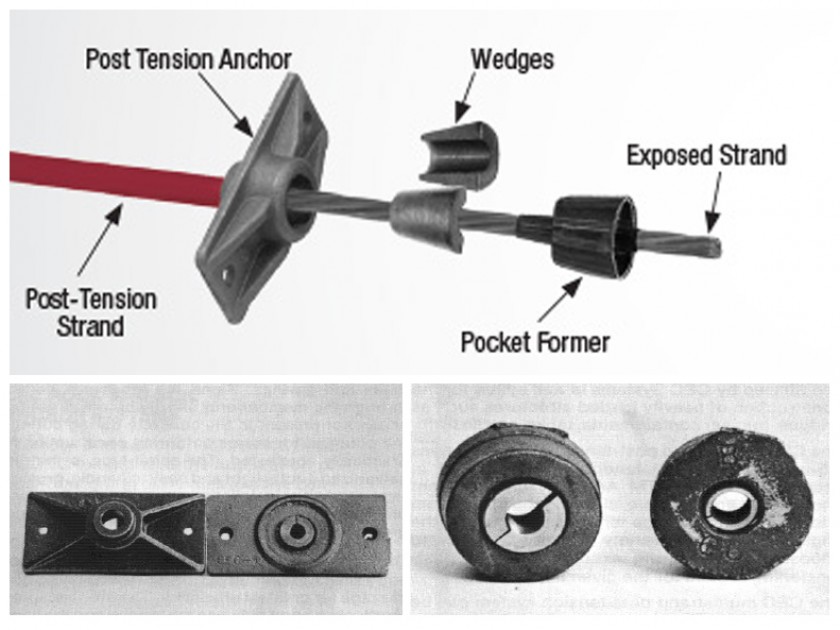
Tendons: High-strength steel strands/wires (the load-bearing element, prefabricated to length).
Sheathing/Coating: A smooth, impermeable plastic or metal sheath that encases the tendon, plus a grease/wax lubricant inside the sheath. This prevents corrosion, reduces friction, and ensures the tendon is unbonded to concrete.
Anchorages: Mechanical devices (at both ends of the tendon) that grip the tendon and transfer the tensile force of the tendon into the concrete structure (e.g., wedge-type anchorages for strands).
Stressing Jack: Hydraulic equipment used to tension the tendon to the design force during construction.
Ducts (optional): Small plastic/conduit channels cast into concrete to guide tendons (for pre-placed tendon layouts).
Advantages of Unbonded Post-Tensioning
Faster Construction: No on-site grouting (the biggest time saver) and prefabricated tendons reduce labor.
Flexible Design: Tendons can be curved/laid out to match complex structural geometries (e.g., flat-plate slabs for high-rises).
Improved Crack Control: Precompression minimizes tensile cracking under service loads; minor cracking (if it occurs) does not compromise the tendon.
Accommodates Movements: Tendon slip allows for minor structural movements (e.g., shrinkage, creep, thermal expansion) without stress buildup.
Lightweight Structures: Enables longer spans with thinner slabs/beams (reduced concrete volume) compared to reinforced concrete.
Common Applications
Residential/commercial flat-plate/flat-slab floors (the most widespread use).
Parking garages, bridge decks, and beam-column frames.
Slabs on grade (for large industrial floors to control shrinkage cracking).
Seismic-resistant structures (in combination with mild steel rebar).
In summary, the unbonded post-tensioning system works by applying a controlled tensile force to a corrosion-protected, unbonded steel tendon after concrete curing, which induces precompression in the concrete to counteract applied loads—all while the tendon remains isolated from the concrete, ensuring flexibility, durability, and efficient load transfer via anchorages.
Send Inquiry



X
We use cookies to offer you a better browsing experience, analyze site traffic and personalize content. By using this site, you agree to our use of cookies.
Privacy Policy