How does a bonded post-tensioning system work?
A bonded post-tensioning system is a method of reinforcing concrete by tensioning steel tendons after the concrete has hardened, with the tendons being permanently bonded to the concrete
Components
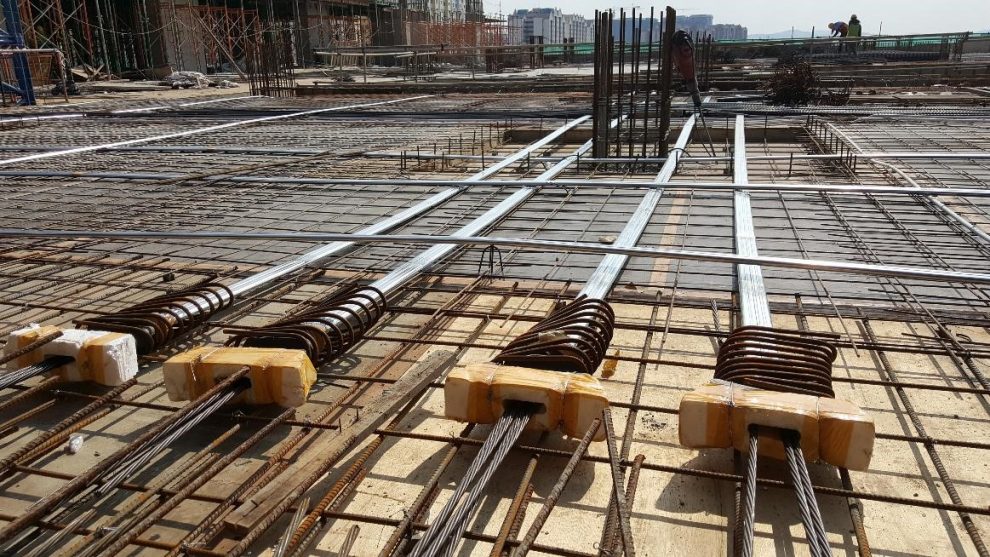
Tendons: High-strength steel cables or bars
Ducts: Plastic or metal tubes that house the tendons
Anchorages: Devices at the ends that transfer tension to the concrete
Grout: Cementitious material that fills the ducts
Working Process
1 Installation Phase
Ducts are placed in the concrete formwork according to the structural design
Tendons are inserted into these ducts before concrete is poured
Anchorages are positioned at both ends of the tendons
2 Concrete Pouring and Curing
Concrete is poured around the ducts and tendons
The concrete is allowed to cure to sufficient strength (typically 70-80% of design strength)
3 Tensioning Process
Hydraulic jacks apply tension to the tendons
Tendons are stretched to the specified force (usually 70-80% of their ultimate strength)
The tension is maintained while anchorages are secured
4 Bonding Phase
Grout is pumped into the ducts under pressure
The grout fills all voids between the tendon and duct
Once cured, the grout creates a permanent bond between tendon, duct, and concrete
Key Advantages
Increased structural capacity: Allows for longer spans and thinner sections
Crack control: Reduces or eliminates cracking under service loads
Durability: The bond protects tendons from corrosion
Load redistribution: Stresses are more evenly distributed throughout the structure
Applications
Bridges and parking structures
High-rise buildings
Industrial facilities
Slabs and beams with large spans
Send Inquiry



X
We use cookies to offer you a better browsing experience, analyze site traffic and personalize content. By using this site, you agree to our use of cookies.
Privacy Policy