Why Does Post Tension Anchorage Matter More Than Many Buyers Expect?
Article Summary
Choosing the right Post Tension Anchorage is not just a technical detail buried inside a construction drawing. It directly affects load transfer, long-term structural stability, installation efficiency, maintenance confidence, and even the risk profile of the whole project. In this article, we break down what buyers and project teams often worry about most: how to judge whether an anchorage system is suitable, what components deserve closer attention, where installation mistakes usually begin, and how a dependable supplier can reduce hidden costs. We also look at the practical value of selecting a manufacturer such as Ningbo Supreme Machinery Co.,Ltd. when consistency, machining accuracy, and application support matter as much as price.
Table of Contents
- What Will This Article Cover?
- What Problems Are Buyers Really Trying to Avoid?
- What Exactly Does Post Tension Anchorage Do?
- Which Components Deserve the Closest Attention?
- How Can the Wrong Choice Create Delays and Extra Cost?
- What Should You Check Before You Buy?
- How Can a Reliable Supplier Make Procurement Easier?
- What Makes One Anchorage Option More Practical Than Another?
- Why Is Long-Term Performance Part of the Buying Decision?
- What Is the Smartest Way to Move Forward?
- FAQ
Outline
- The real-world pain points behind anchorage selection
- The working role of a Post Tension Anchorage system
- Key parts that influence safety and installation quality
- Common purchasing mistakes that increase project risk
- A clear checklist for evaluating products and suppliers
- How supplier support affects delivery, fit, and confidence on site
- Practical guidance for comparing options without guesswork
What Problems Are Buyers Really Trying to Avoid?
Most buyers are not lying awake thinking about anchorage in abstract engineering terms. They are worried about something much more immediate: whether the system will install smoothly, whether it will perform under load as expected, and whether an avoidable product issue will throw the project into confusion. A poor anchorage choice can turn into labor waste, site delays, rework, disputes between teams, and a lot of expensive second-guessing.
In many projects, the buyer is balancing several pressures at once. There is budget pressure from procurement, schedule pressure from project management, technical pressure from engineers, and quality pressure from the end client. That is exactly why Post Tension Anchorage matters. It sits at a point where structural intent meets real-world execution.
When buyers ask the right questions early, they are usually trying to avoid these familiar problems:
- Unclear compatibility with strand size or structural design
- Inconsistent casting or machining quality between batches
- Weak sealing or poor fit that complicates site work
- Late delivery that interrupts tendon installation schedules
- Insufficient technical communication from the supplier
- Products that look acceptable on paper but create trouble during assembly
A buying decision becomes much easier when the supplier understands those concerns instead of simply listing product names and dimensions.
What Exactly Does Post Tension Anchorage Do?
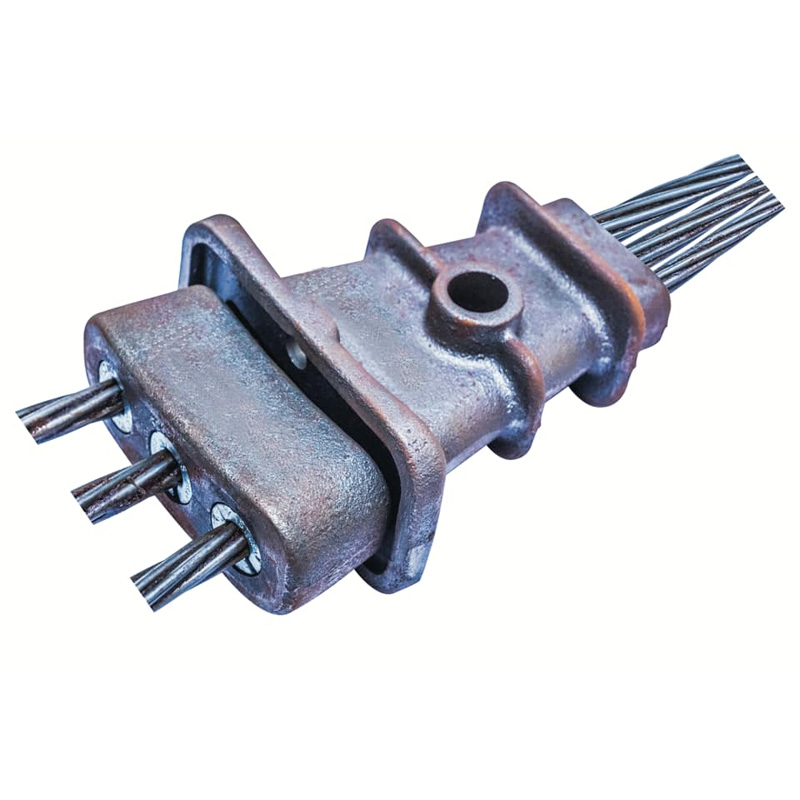
At its core, a Post Tension Anchorage system is responsible for holding and transferring prestressing force effectively at the ends of the tendon arrangement. That sounds simple when written in one sentence, but on a jobsite it carries enormous weight. If the force transfer is not stable and reliable, the wider structural purpose of the post-tensioning system is undermined.
Good anchorage does more than “hold.” It supports dependable stress transfer, helps keep the assembly process controlled, and contributes to the long-term confidence people expect from a prestressed concrete system. Buyers who understand this usually stop treating anchorage as a low-attention accessory and start evaluating it as a serious performance component.
In practical terms, the system is expected to deliver:
- Reliable anchoring of prestressing strands
- Stable force transfer at the tensioning end
- Dimensional consistency for easier installation
- Confidence across bonded and, where applicable, unbonded construction use
- Compatibility with site conditions, strand arrangement, and hardware selection
That is why experienced buyers do not focus on price alone. They look at how the product behaves inside the full construction process.
Which Components Deserve the Closest Attention?
Buyers sometimes compare anchorage systems too broadly and miss the details that actually shape performance. The better approach is to look closely at the parts that determine fit, locking action, assembly simplicity, and overall stability.
A typical comparison should include the following core components:
| Component | Why It Matters | What Buyers Should Watch For |
|---|---|---|
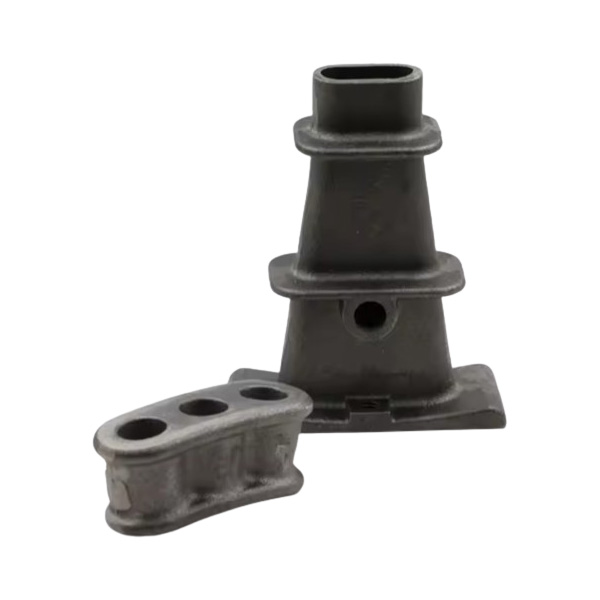
| Anchor Head | Acts as a primary load-transfer element in the system | Dimensional accuracy, material quality, and clean machining |
| Wedge | Helps grip and lock the strand securely | Consistent fit, dependable locking behavior, and surface quality |
| Bearing Plate or Anchor Plate | Distributes load into the concrete zone | Strength, geometry, and stable integration with the assembly |
| Reinforcement-Related Matching Parts | Support installation and local stress control | System compatibility and practical site coordination |
Material choice matters too. Buyers often prefer products made with sound material control because it improves confidence in strength, durability, and manufacturing consistency. When a supplier can explain not only what the parts are, but why the design and material choices help simplify machining or installation, that usually signals stronger product understanding.
How Can the Wrong Choice Create Delays and Extra Cost?
Buyers usually notice the direct unit price first, but the real cost of a poor product decision often shows up later. The wrong Post Tension Anchorage can create hidden expenses in ways that are frustrating precisely because they feel avoidable.
For example, if the delivered parts are inconsistent, site teams may spend extra time sorting components, confirming fit, or adjusting installation sequencing. If there is uncertainty about compatibility, engineers and procurement staff may lose time in back-and-forth clarification. If the supplier is slow to answer technical questions, the project starts absorbing delay from every direction.
Hidden cost often comes from:
- Rework caused by poor dimensional consistency
- Downtime while teams wait for confirmation or replacement parts
- Additional inspection and coordination effort
- Schedule disruption during tensioning stages
- Loss of confidence between contractor, supplier, and owner
This is why experienced buyers treat procurement as risk control, not just price negotiation.
What Should You Check Before You Buy?
A smart evaluation process does not need to be complicated, but it does need to be disciplined. Buyers who rely only on a catalog description often end up with more uncertainty than they expected. A better approach is to build a short but useful checklist before placing the order.
Here is a practical pre-purchase checklist for Post Tension Anchorage:
- Confirm strand diameter and intended application range
- Check whether the system design matches bonded or relevant project requirements
- Review the material approach and manufacturing consistency
- Ask how the supplier controls accuracy across repeated production batches
- Verify what components are included in the supply scope
- Clarify lead time and packaging for shipment protection
- Ask for clear technical communication if drawings or sizing need confirmation
- Evaluate whether the supplier understands construction-side concerns, not only factory-side details
Buyers who do this early tend to reduce uncertainty for everyone downstream.
How Can a Reliable Supplier Make Procurement Easier?
A reliable supplier does not merely ship parts. A reliable supplier reduces friction. That distinction matters. When buyers work with a manufacturer that understands production discipline and application expectations, the conversation becomes clearer, faster, and more useful.
Ningbo Supreme Machinery Co.,Ltd. stands out in this context because buyers are not just looking for a product label. They are looking for a supplier that can support practical purchasing decisions with clearer communication, consistent manufacturing, and a better understanding of how anchorage components function in real construction environments.
Procurement becomes easier when the supplier can provide:
- Product information that is specific rather than vague
- Component-level clarity instead of generic promises
- Stable quality from batch to batch
- Responsive communication during quotation and order confirmation
- Confidence that the product was designed with real installation logic in mind
That kind of support is often what separates a smooth sourcing experience from a stressful one.
What Makes One Anchorage Option More Practical Than Another?
Practicality is not just about whether a product can technically work. It is about whether it works well in a real purchasing and construction context. Buyers should be asking which option is easier to specify, easier to coordinate, and easier to trust once it arrives on site.
The most practical Post Tension Anchorage option is usually the one that balances these three things:
| Priority | Why It Matters in Practice |
|---|---|
| Reliability | Because no buyer wants to save a little upfront and lose far more through site disruption |
| Compatibility | Because even a well-made product becomes troublesome if it does not align with the project’s strand and system requirements |
| Procurement Clarity | Because unclear supply scope or vague technical communication leads to confusion, delay, and avoidable argument |
Buyers should also value products that support more efficient assembly logic. If a design approach helps simplify processing or improves compactness and reliability, that can translate into real project value beyond the catalog description.
Why Is Long-Term Performance Part of the Buying Decision?
Procurement teams are sometimes pushed to think only in terms of immediate delivery. But the buying decision should also reflect how the anchorage system contributes to long-term confidence after installation. Structural systems are judged over time, not only on delivery day.
That means buyers should think about durability, fit stability, assembly integrity, and whether the supplied product supports dependable force transfer without introducing extra doubt into the build process. Long-term performance is not separate from procurement; it is one of procurement’s most important responsibilities.
When buyers take this broader view, they usually make calmer and better decisions. They stop asking only, “Which quote is lower?” and start asking, “Which option gives us fewer problems later?”
What Is the Smartest Way to Move Forward?
The smartest way to choose a Post Tension Anchorage is to treat it as a performance-critical system component, not a minor procurement item. Buyers who focus only on the lowest quoted number often discover the true cost later in delays, doubt, coordination trouble, and avoidable rework.
A better path is simple: clarify the project requirement, compare the system details carefully, ask the supplier direct questions, and work with a manufacturer that understands both production consistency and application reality. That is where a dependable partner such as Ningbo Supreme Machinery Co.,Ltd. can make a meaningful difference.
If your team is evaluating Post Tension Anchorage options and wants clearer product communication, more dependable supply support, and greater confidence before ordering, now is the right time to contact us and start the conversation with a supplier that takes your project risks seriously.
FAQ
What is the main role of Post Tension Anchorage?
Its main role is to anchor the prestressing strand and transfer force effectively within the post-tensioning system. In practical terms, it helps the structural design perform as intended while supporting stable installation and long-term reliability.
Which factors matter most when comparing Post Tension Anchorage suppliers?
Buyers should pay attention to product consistency, material control, dimensional accuracy, communication quality, lead time stability, and whether the supplier can clearly explain component matching and intended application.
Why can a low-priced anchorage option become expensive later?
Because cost is not only about the purchase price. Poor fit, inconsistent quality, weak communication, and installation trouble can create rework, project delays, extra inspection effort, and strained coordination between teams.
What should buyers confirm before placing an order?
They should confirm strand size, application suitability, component scope, production consistency, delivery expectations, and the supplier’s ability to answer technical questions clearly before the product reaches the site.
Why do buyers work with Ningbo Supreme Machinery Co.,Ltd. for this product category?
Because buyers usually want more than a basic product list. They want a manufacturer that supports a smoother purchasing process with clearer communication, more dependable manufacturing, and a better grasp of what matters during real project execution.
Ready to source a more dependable Post Tension Anchorage solution for your next project? If you want clearer specifications, steadier product quality, and supplier support that helps you buy with confidence rather than guesswork, contact us today and let Ningbo Supreme Machinery Co.,Ltd. help you move from inquiry to decision with less risk and more certainty.
Send Inquiry



X
We use cookies to offer you a better browsing experience, analyze site traffic and personalize content. By using this site, you agree to our use of cookies.
Privacy Policy